ARISS: talk with astronauts
Use amateur radio to connect a classroom with the International Space Station.
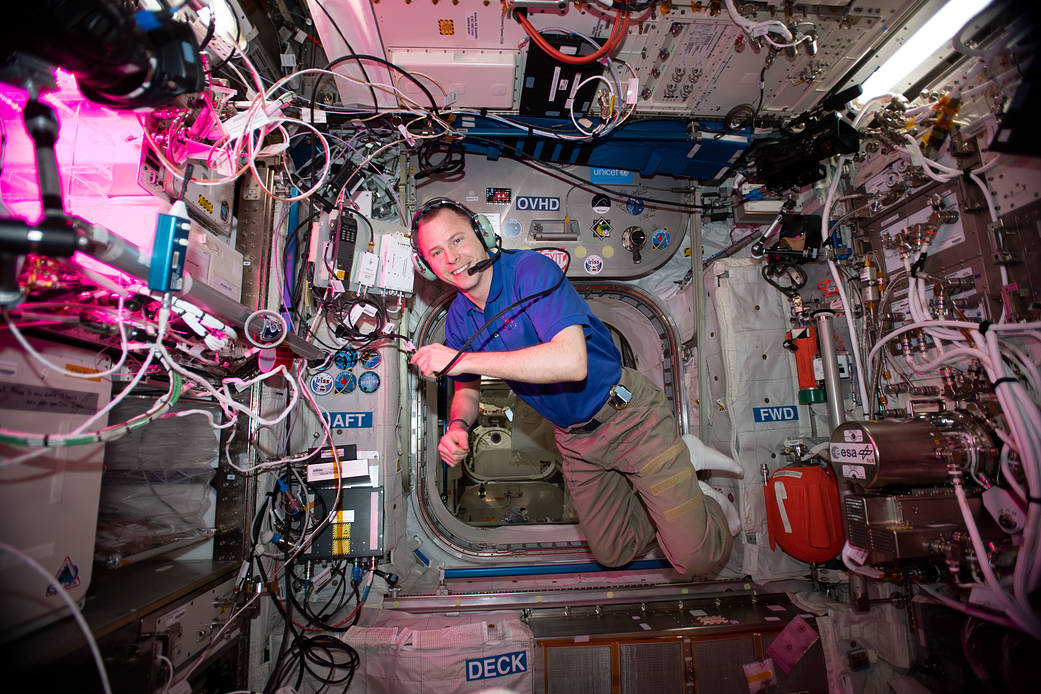
Photo: NASA · Nick Hague aboard the ISS
Watch: ARISS Enables First Educational Contact in Venezuela ↗
NASA Johnson · YouTube
What you can do
ARISS stands for Amateur Radio on the International Space Station. Students ask an astronaut questions through a scheduled radio contact, learning about space and radio along the way. Imagine asking how experiments work when everything floats!
How a school contact works
A direct contact uses a radio station at the school. A telebridge uses an ARISS ground station elsewhere, with the classroom connected by telephone or an online link. Radio still carries the conversation between Earth and the ISS. Volunteers and an ARISS mentor help selected groups prepare.
A good first step
Watch the NASA video below the photo, or check the ARISS upcoming contacts page for livestreams. Schools and educational organizations can apply through their regional ARISS team. Start with a teacher and a local radio club; selection and scheduling take preparation.
Listen for a voice from space
With a suitable receiver and antenna, try listening during a scheduled contact when the ISS is in range. The usual school voice downlink is 145.800 MHz FM. Check the contact announcement and current station status first. You may hear only the astronaut’s side. Receiving a signal is a different experience from watching an internet stream.
What about other ISS radio activities?
Depending on the equipment and schedule, the ISS can also relay contacts between hams, carry packet messages, or send still pictures during SSTV events. Astronaut conversations are not available on demand. Keep scheduled school contacts clear and plan any transmitting with an experienced licensed operator.
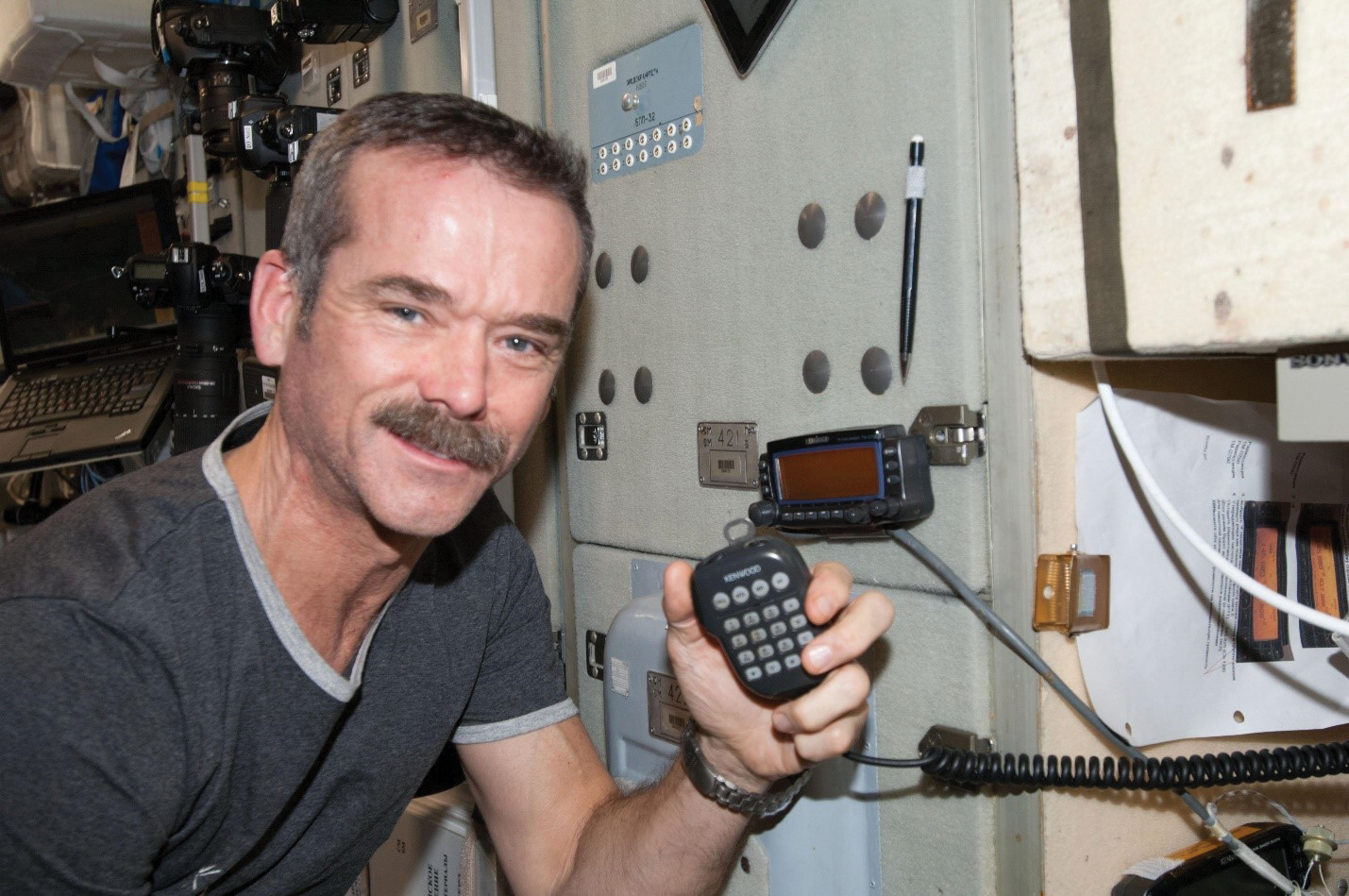
Try it together
Write three questions you would ask an astronaut. Take turns being the astronaut and the student, keeping each question short. Then watch a real contact and compare your questions.
Keep learning
Reviewed November 23, 2026.