A CENTURY OF CURIOSITY
The history of
ham radio.
From a spark on a workbench to a voice from space. A story of people who kept asking, “How far can this signal go?”
Explore ten chapters, with archival photographs and visual explanations. Start anywhere. No account needed.
Start the story
Before 1912
The air becomes a place to experiment
Radio grew out of scientific discoveries about electricity, magnetism, and electromagnetic waves. James Clerk Maxwell described the theory; later experimenters turned it into equipment that could send information without a wire connecting the two stations. Marconi’s 1901 transatlantic experiment became a famous milestone in wireless communication. It was not an amateur radio contact.
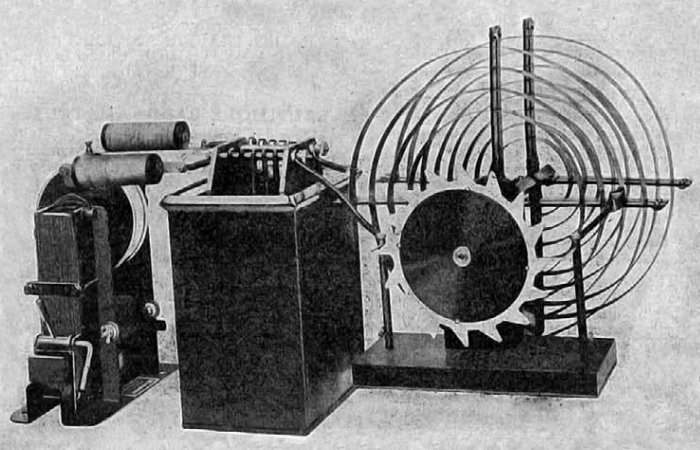
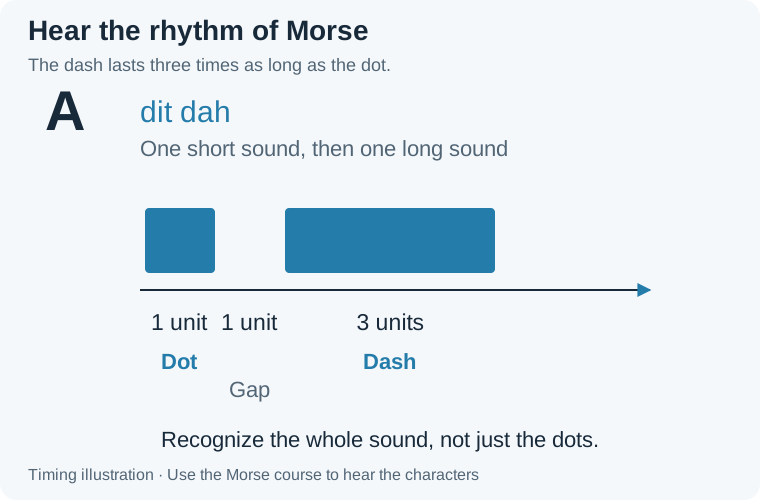
Early enthusiasts built receivers and spark transmitters at home. A Morse key switched the transmitter on and off, creating patterns that another operator could recognize. Spark signals occupied a broad range of frequencies, so nearby stations could interfere with one another. Learning to hear a distant signal was as much a part of the adventure as building the equipment.

1912–1914
Call signs, licenses, and a relay league
As wireless activity increased, sharing the airwaves became a serious problem. The United States Radio Act of 1912 brought federal licensing requirements for amateur stations and operators and sharply limited their operating wavelengths. A call sign gave a station an identity that other operators could record and recognize.
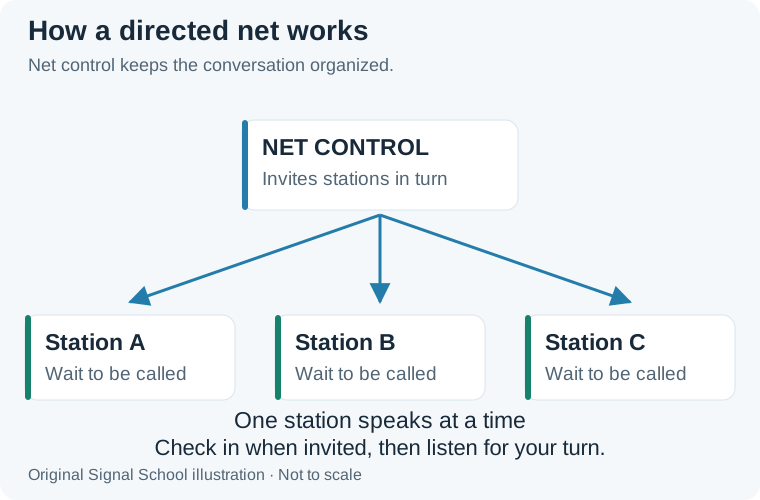
In 1914, Hiram Percy Maxim helped establish the American Radio Relay League. The word “relay” explains the original idea: a message could travel farther by being passed from one amateur station to the next. Cooperation made a collection of individual stations much more useful. Clubs, publications, and shared operating habits helped turn isolated experiments into an organized community.
1921–1923
A backyard station reaches another continent
In December 1921, Paul Godley listened in Scotland for signals from North American amateurs. The tests showed that amateur stations could be heard across the Atlantic. Station 1BCG in Connecticut was a key participant. Hearing a station across an ocean was an extraordinary result for people working with comparatively modest equipment.
Reception in 1921 was not the same achievement as a two way conversation. That next milestone followed in 1923, when amateurs in North America and France exchanged signals across the Atlantic. The distinction matters: first someone proves that a signal arrives; then both ends prove they can hear and answer each other.
Shortwave radio opened a new kind of neighborhood. The person answering might be thousands of miles away. Operators kept logs of contacts and learned which bands and times offered useful paths. Experimenting with an antenna or a receiver could make the difference between silence and a new country in the log.
1925
An international hobby needs an international voice
Radio signals do not stop at national borders. As shortwave communication became valuable to governments and businesses, amateurs needed a way to defend access to the spectrum together. Representatives from 25 countries founded the International Amateur Radio Union in Paris in 1925.
The IARU gave national amateur organizations a way to work toward shared goals. Its history is a reminder that the bands are not simply empty space waiting for someone to use them. Amateur radio depends on international agreements, national rules, and operators who demonstrate that experimentation and public service deserve a place on the dial.
April 18 is celebrated as World Amateur Radio Day. Although this page includes several United States milestones, the larger story belongs to experimenters, clubs, and national societies around the world.
1933 onward
Take the station outside
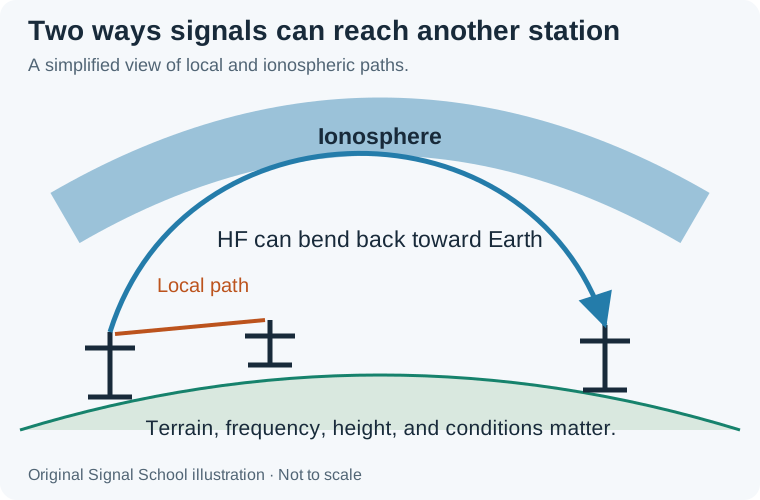
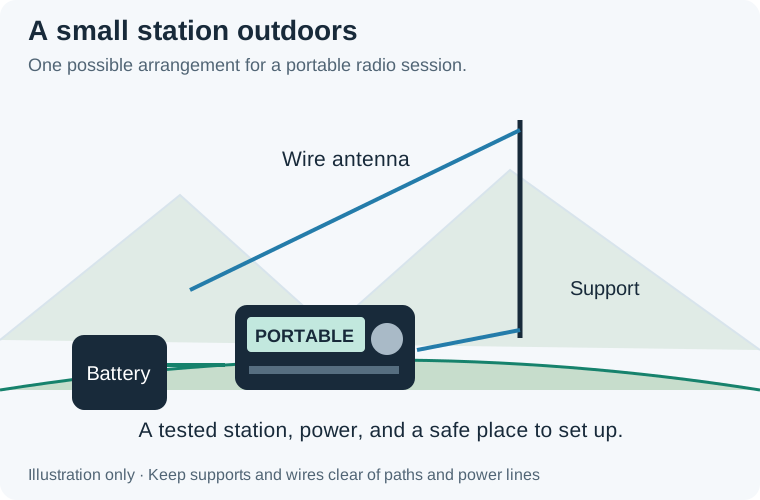
ARRL Field Day began in 1933. It brought an enduring challenge into amateur radio: set up a station away from the usual comfortable operating position and make contacts. A temporary antenna, portable equipment, and a different power source make operators think about the whole station.
Field Day combines operating practice, technical problem solving, teamwork, and a chance for visitors to see radio in action. It is also a useful setting for a first contact under the guidance of an experienced operator. The person who has never touched a microphone can sit beside someone who has been building antennas for decades.
That combination of skill and welcome is part of amateur radio’s service tradition. Moving messages accurately requires practice. So does choosing a location, managing power, and getting equipment to work when the usual setup is unavailable. An exercise develops those abilities before they are needed.
1920s–1960s
From sparks to clear voices
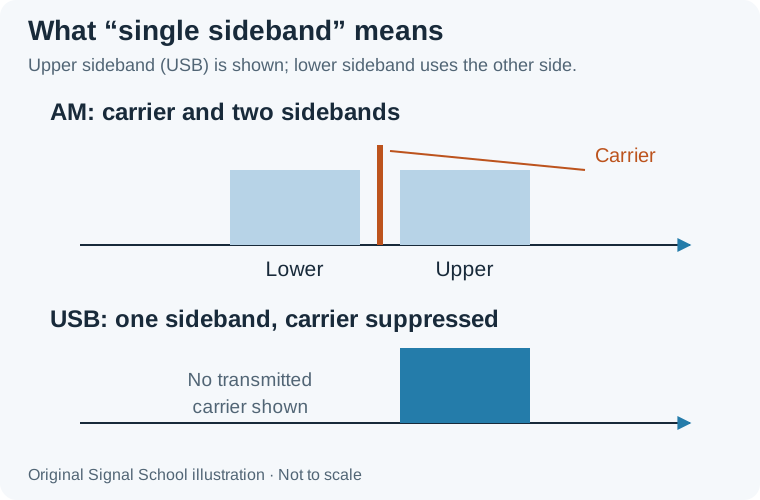
Vacuum tubes replaced spark transmitters with more controlled signals. Voice operation grew, and later single sideband made voice communication more efficient. Separate transmitters and receivers increasingly gave way to transceivers that put both jobs in one unit.
World wars interrupted the hobby. Amateur stations were shut down in many countries, with rules and dates varying by country. After World War II, surplus equipment gave many operators another route into building and experimenting. Radioteletype, higher frequencies, and mobile operation broadened the possibilities.
A transceiver changes the experience at the operating desk: the same front panel can tune a signal, receive it, and transmit a reply. But the basic questions remain familiar. Can you hear the other station? Is your antenna suitable? Is the frequency clear? A new technology adds choices without removing the need to listen carefully.
1961
Amateurs put a signal in orbit
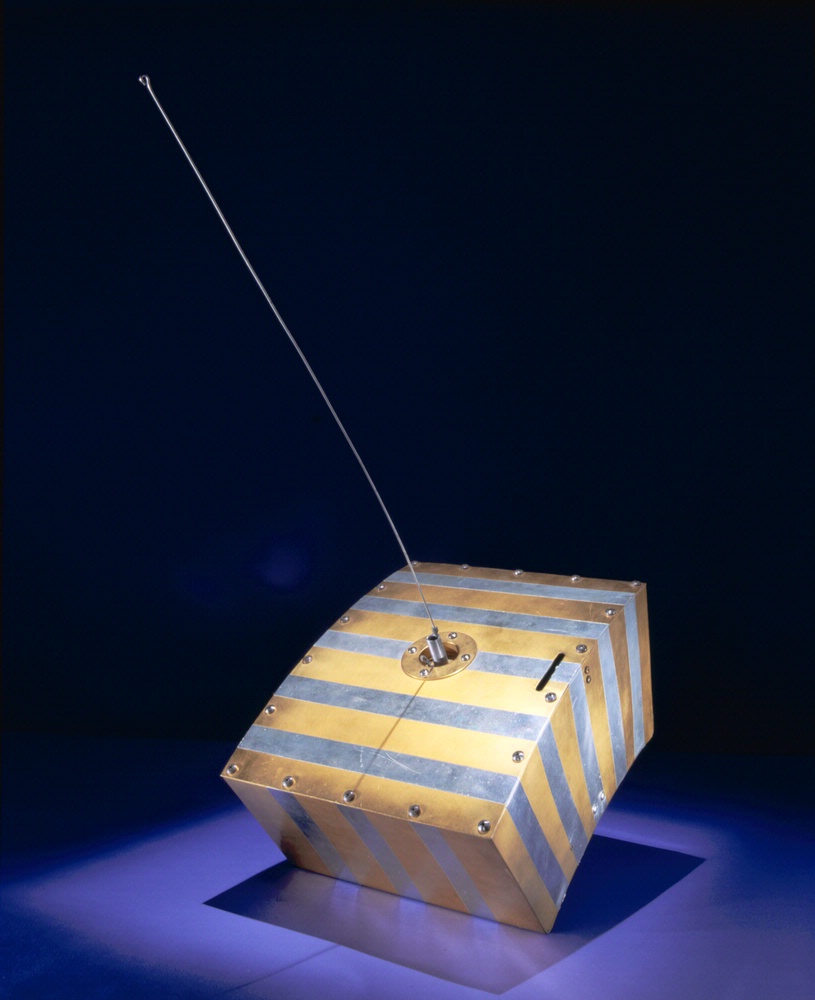
On December 12, 1961, OSCAR 1 became the first amateur radio satellite to reach orbit. It was built by Project OSCAR volunteers and launched only four years after Sputnik. A small beacon in space was something amateurs around the world could try to hear.
The letters OSCAR refer to an Orbiting Satellite Carrying Amateur Radio. The first spacecraft was a beacon, not a voice repeater for conversations. Later amateur satellites offered ways for stations on Earth to communicate through space. AMSAT, formed in 1969, continued and expanded this work.
Satellite operation adds motion to the puzzle. The spacecraft rises, moves across the sky, and disappears below the horizon. Operators plan a pass, point an antenna, and account for a changing received frequency caused by the Doppler effect. It is an accessible way to connect an everyday radio experiment with orbital mechanics.

1983 onward
A familiar call sign comes from space
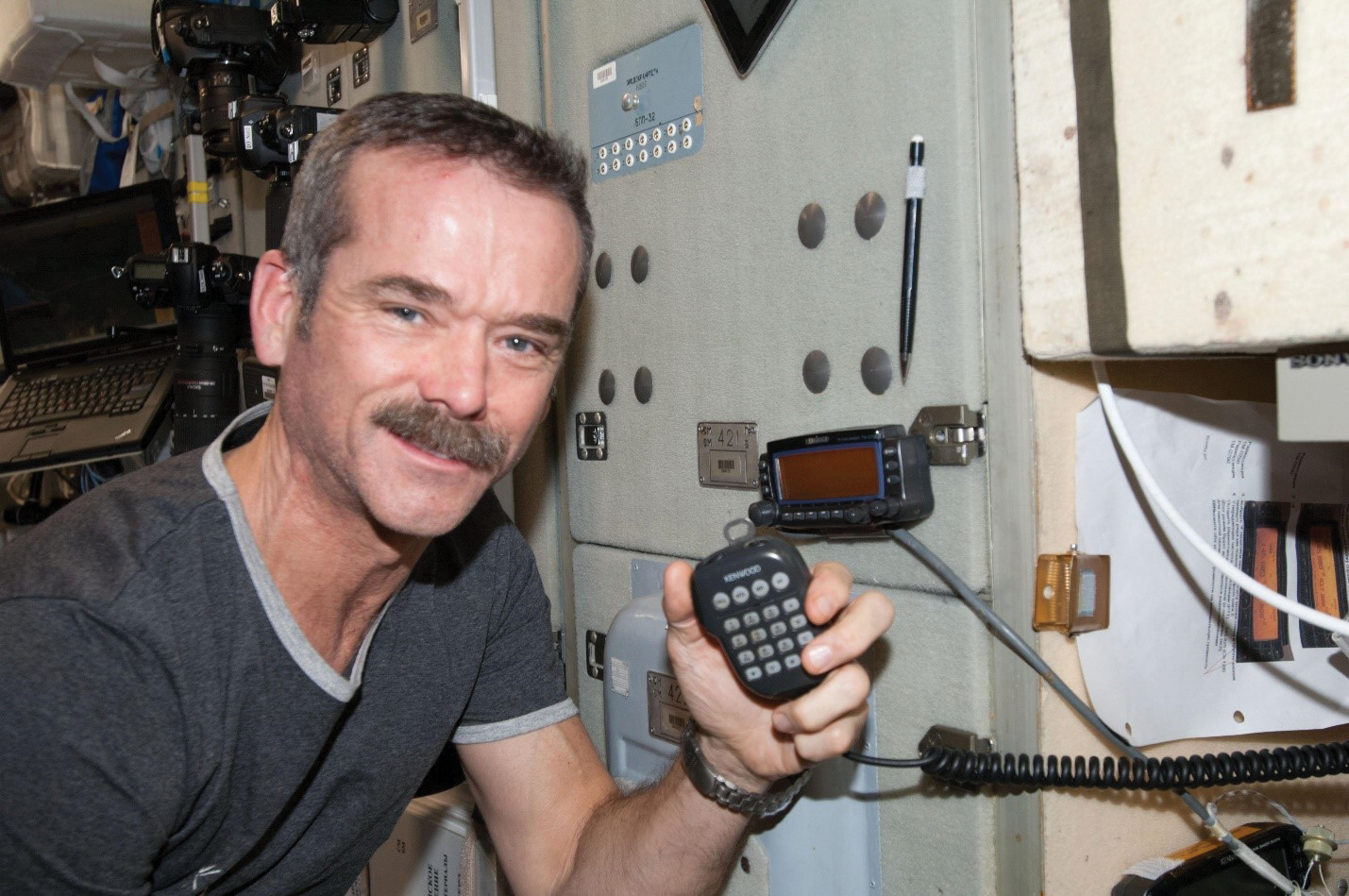
In 1983, astronaut Owen Garriott, W5LFL, carried amateur radio aboard space shuttle Columbia on mission STS-9. People on the ground could hear and contact an astronaut through amateur radio. This was different from listening to NASA mission control: radio amateurs were participating in the exchange.
The Shuttle Amateur Radio Experiment helped bring astronaut contacts into classrooms. In 1996, international amateur radio and satellite organizations formed ARISS to develop educational amateur radio activity aboard the International Space Station.
For a student, the memorable part is wonderfully direct: ask a question into a microphone and hear an astronaut answer. Behind that moment are volunteers, equipment preparation, timing, and classroom learning. The contact gives a purpose to lessons about waves, geography, orbits, and clear communication.
Computers join the station
Messages become patterns a computer can read
Amateur communication is not limited to voices or hand sent Morse. Radioteletype and later computer based modes let operators send written information over the air. A computer can encode a message into a signal and help recover it at the receiving station.
The WSJT project focuses on communication with weak signals. Modes such as FT8 use structured exchanges, precise timing, and signal processing to make contacts in conditions where a voice conversation may be difficult. The messages are brief: a successful exchange is not the same as a free flowing chat.
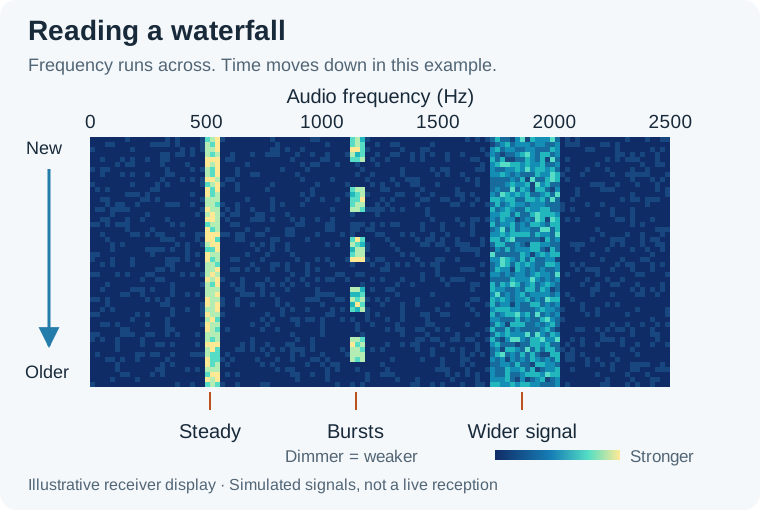
A waterfall display makes activity visible. Frequency runs across the screen while time moves down it, leaving traces of signals. It is another way to notice patterns: where a station is, how wide its signal is, and when it transmits. Computers added a new set of tools to the experimenter’s workbench.
2007 and the next generation
More ways to start, more things to discover
On February 23, 2007, the United States ended the Morse code examination requirement for amateur licenses. This removed a test requirement; it did not remove Morse from amateur radio. Operators still learn and enjoy CW for its sound, simplicity, and operating challenges.
There is no single correct way to enjoy the hobby. You might like building an antenna, meeting people on a local repeater, carrying a small station outdoors, studying propagation, or decoding a signal on a computer. Those activities all invite the same habit: try something, observe what happens, and learn from the result.
A local club or patient mentor can make the first steps much easier. Amateur radio’s history continues every time someone helps a beginner make a first contact. The next person at the microphone could be you.
Your own first chapter.
Meet the people, learn the basics, and try your first questions.